
This introduction is intended for a general audience. It is a synthesis of several published technical papers written over the past three decades. Readers with backgrounds in physics or astronomy may find this overview a bit rudimentary, but I still recommend reading it before proceeding to the supporting publications in the next section.
Left: The power of volcanoes is just one of several long-standing paradoxes that may be explained by the tresino theory.
A New State of Matter
Almost everyone, from their own direct observation, is familiar with several of the common phases or states of matter. For illustration, consider ordinary water. The phase transitions move from ice (solid) to water (liquid) to steam (gas) as the temperature is increased. These three states are well known, but as the temperature rises beyond the gas phase, a new phase is encountered: plasma. The plasma phase is well known to physicists, chemists, astronomers, and other scientists, but it is less familiar to the lay person because it is not a common phase of matter on Earth. Yet it may well be the most common state of matter in the Universe.
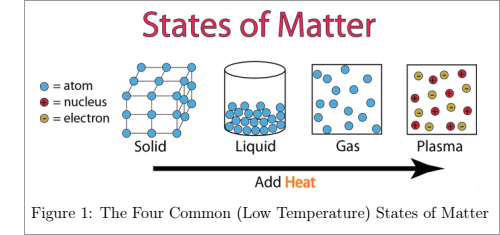
Stars are essentially superheated balls of plasma. A plasma consists of highly charged particles with extremely high kinetic energy (the energy of mass in motion). Noble gases like helium, neon, argon and xenon are often used to make glowing signs by using electricity to excite them into a plasma state. Similarly, a plasma TV works by activating tiny pixel cells of neon or xenon gas with electricity to turn them red, blue, or green.
The tresino theory proposes that a new state of matter exists at temperatures beyond the plasma phase in the early Universe. I believe that this state of matter was first produced during the early expansion of the Universe, yet its presence may still be observed today. In fact, it is still being produced and may be the key to understanding several long-standing scientific paradoxes.
Paradoxes
After two decades as a nuclear physicist (investigating potential new energy sources from laser fusion and magnetic fusion), I became intrigued by unexplained phenomena pouring in from scientists all over the world. They claimed to be producing excess heat via fusion at room temperature. As it turned out, “cold fusion” as it came to be known was neither cold nor fusion. Moreover, it was incorrect. At least the explanations were wrong. This is not to say that the scientists documenting anomalous findings were being mendacious. They just didn’t know what they were seeing. At the time, neither did I.
As John Reitz and I began pondering the possibility of a new observations that didn’t make sense to us, we started to reflect on other paradoxes in the physical sciences that involved energy production:
“How wonderful that we have met with a paradox. Now we have some hope of making progress.
Niels Bohr
- The excess heat of the earth
Why hasn’t our planet cooled and turned into a cold rock? - The unexplained power of volcanoes
Why are volcanoes much more powerful than they should be? - The unexplained heat of the sun’s corona
Why is the temperature at the surface of the sun just a few thousand degrees, but millions of degrees as you move further into the corona? - The so-called “dark matter” and “dark energy” in cosmology
These may be direct evidence of new states of matter.
Seldom, in physics, is one arena of observations wholly disconnected from all others having some common materials. With this in view, we knew that observations in laboratory experiments that showed “excess heat” involving deuterium (hydrogen isotope), the hydrogen in the solar corona as well as the hydrogen in the expansion of the Universe might all be connected in some way. But this connection was initially something to watch for as our research continued.Could all of these apparent paradoxes be connected to a new state or phase of matter? Before our research, it could have been, but that would have to be shown.
The Most Abundant Element in the Universe
Most readers, even non scientists, will recall from their earliest chemistry classes that hydrogen is one of the simplest and most abundant elements in the universe. It’s the first element in the periodic table, the lightest, and it was among the first produced after the Big Bang. Roughly 75% of the mass of our known universe is hydrogen plasma (and, I believe, a hydrogen variant may also make up most of the unknown mass of the universe). Simply put, it’s everywhere and there’s a lot of it.
The most common form of hydrogen (1H) has a simple atomic structure: A single electron (with a negative charge) bound to a nucleus with a single proton (with a positive charge). In this form it is quite stable. Nearly all hydrogen at low temperature (99.98%) exists in this configuration. The other two naturally occurring forms include deuterium (2H), which has a neutron along with a proton in its nucleus, and tritium (3H), which contains one proton and two neutrons in its nucleus.
It’s the plasma state where hydrogen gets very interesting.
On Earth, we know hydrogen mainly as a gas since it takes this form at our planet’s surface. When supercooled, however, we can convert it to a liquid for rocket fuel. Solid hydrogen is rare and has few earthly applications since it must be cooled to −259.14 °C. But it’s the plasma state where hydrogen gets very interesting. The plasma state of hydrogen, or any other element for that matter, does not exist on earth under normal conditions, but plasmas are likely the most abundant form of standard matter in the Universe. The hydrogen plasma powers the stars, including our sun. It’s the energy production mechanism that powers our universe.A plasma occurs when a gas is superheated and sufficiently dense. As with other states of matter (solids, liquids and gasses), every element has a different set of conditions necessary to reach its plasma state. During the plasma phase transition, the gas gets very excited and eventually becomes ionized. (Ionization is the process by which an atom or a molecule acquires a negative or positive charge by gaining or losing electrons.) In the case of hydrogen, electrons separate from their protons, resulting in a gaseous mass of highly excited free electrons and protons. The plasma phase is literally where the excitement begins.
A New Composite is Born
Fusion reactions in a hydrogen plasma, like at the Sun’s core, require temperatures on the order of 100-million-degrees-Celsius (180 million degrees Fahrenheit).
This makes it difficult to reproduce on earth, even in a controlled laboratory setting. As a plasma cools, a number of things may happen. Ionized particles may regroup, with electrons and protons pairing back up to return to standard hydrogen gas. Other free protons and electrons may be cast off and remain ions. But a third, most interesting option is possible.
tres = three
-ino = small
In the gaseous mixture of free protons and electrons in the plasma phase of hydrogen, it is possible for two free electrons to bind with a single proton to form a new three-body composite that has a net negative charge.
For ease of communication we have termed this composite a tresino. It may also be called a Compton composite because it exists at the Compton scale; a scale intermediate between the nuclear and atomic scales. The tresino is quite stable, because it is a bound state that is energetically held together at about the 3700 eV. (eV is a measure of energy.) This also means that when the tresino forms, it releases a similar amount of binding energy (3.7 keV), causing a recoil that kicks the now-free proton away as the tresino’s second electron locks into its stable orbit.Note that the binding energy of the hydrogen atom is just 13 electron volts. Hence, the tresino’s binding energy is 272 times stronger (i.e. much more strongly bound).
Missing Energy and Missing Mass
In the early Universe, the tresino transition changes the ordinary plasma of protons and electrons into a new plasma of roughly equal numbers of tresinos and protons. But, now due to electrostatic attraction, some of the protons and tresinos (about 25%) recombine into small rotating dark rotors and the remainders (about 70%) continue on to populate the later Universe as dark energy. These two dark components represent the so-called dark matter and dark energy in observations of the current cosmology known as the big-bang theory.
A Potential New Energy Source
If the energy from tresino formation can be tapped into, a new source for power production will become possible. Laboratory experiments showing this a viable outcome will be required as the first step toward developing clean power reactors.
 Frederick J. Mayer