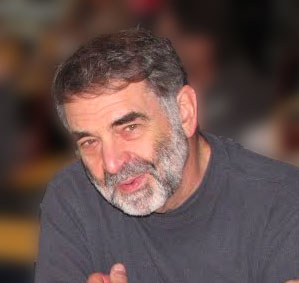
I was born and grew up in Lock Haven, Pennsylvania. My father, a German-Jewish immigrant, was a self-taught mechanical engineer. He owned and operated a small machine shop where he invented and patented several useful devices.
I inherited my father’s curiosity and from a very young age became interested in how things work. I especially enjoyed learning about and building radios. I received my amateur radio operators license when I was thirteen. In high school I competed in science fairs and won several awards.
Following high school, I attended Pennsylvania State University in State College, PA, where I received my B.S. in Physics in 1962. Next, I attended Case Institute of Technology (now Case Western Reserve University), in Cleveland, Ohio, where I received my Ph.D. in 1968.
After completing a few years of post-doctoral work in plasma physics at Case, I took a position as a research physicist at KMS Fusion, in Ann Arbor, Michigan. I helped set up fusion experiments with an Nd glass laser which at the time was one of the most powerful lasers in the world. Early results in this fusion program were positive, but several years of experimenting did not produce the large increases in energy output that was expected.
In 1988, I left KMS Fusion and started my consulting business — Mayer Applied Research Inc. In the late 1980s there was more investment in R&D than there has been since, and I had a steady flow of contracts helping laboratories and companies understand and model their experiments. In 1989, there was a claim of sustained nuclear fusion reactions at room temperature. It was incorrectly called “cold fusion.” While it was neither cold nor fusion, it was quite an intriguing mystery. My attempts to understand what many electro-chemists were observing (but not understanding) led me, and my colleague, John Reitz, on the path to discovering a new phase of matter. This new phase, under some conditions, produces a new composite particle. My research publications explain this discovery and its implications.
My Collaboration with John Reitz
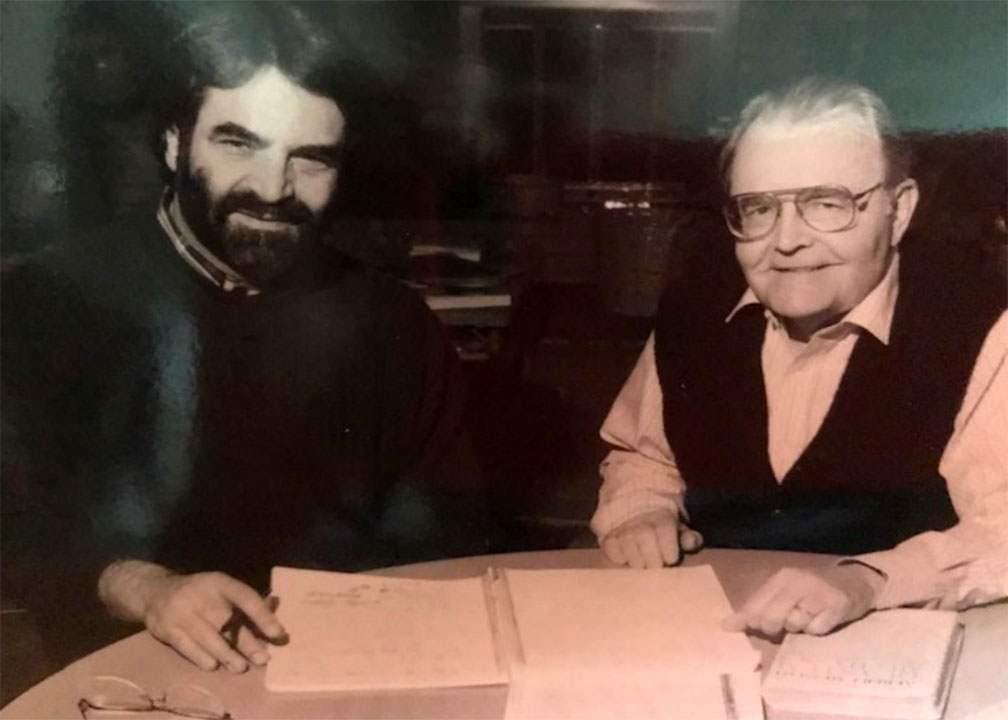
When I started graduate school at Case Institute of Technology in the early 60s, Professor John R. Reitz was assigned to be my faculty advisor. John taught an excellent course in Statistical Mechanics during which I came to understand the depth of his knowledge of physics and mathematics.
Just after our early interactions, John left to be the physics department chairman at the Ford Research Lab in Dearborn, Michigan, and I went on to post-doctoral research and then a position with KMS Fusion in Ann Arbor.
Interestingly, John and I came together again when we both sat on an American Physical Society committee on industrial physics. We discovered then that we lived only a few blocks from each other in Ann Arbor. We continued our interests in contemporary physics research, first in astrophysics and later in low energy nuclear reactions. Our research and discussions in this area led to the development of the tresino theory. The collaborations with John turned out to be the most exciting and fruitful research of my career.Sadly, John passed away in 2016 before some of our work had been completed and published. However, I continue to pursue tresino implications. I am confident that this theory is correct.
 Frederick J. Mayer